Sacred Geometry & Shape Optimization
Geometry and numbers are a universal language.
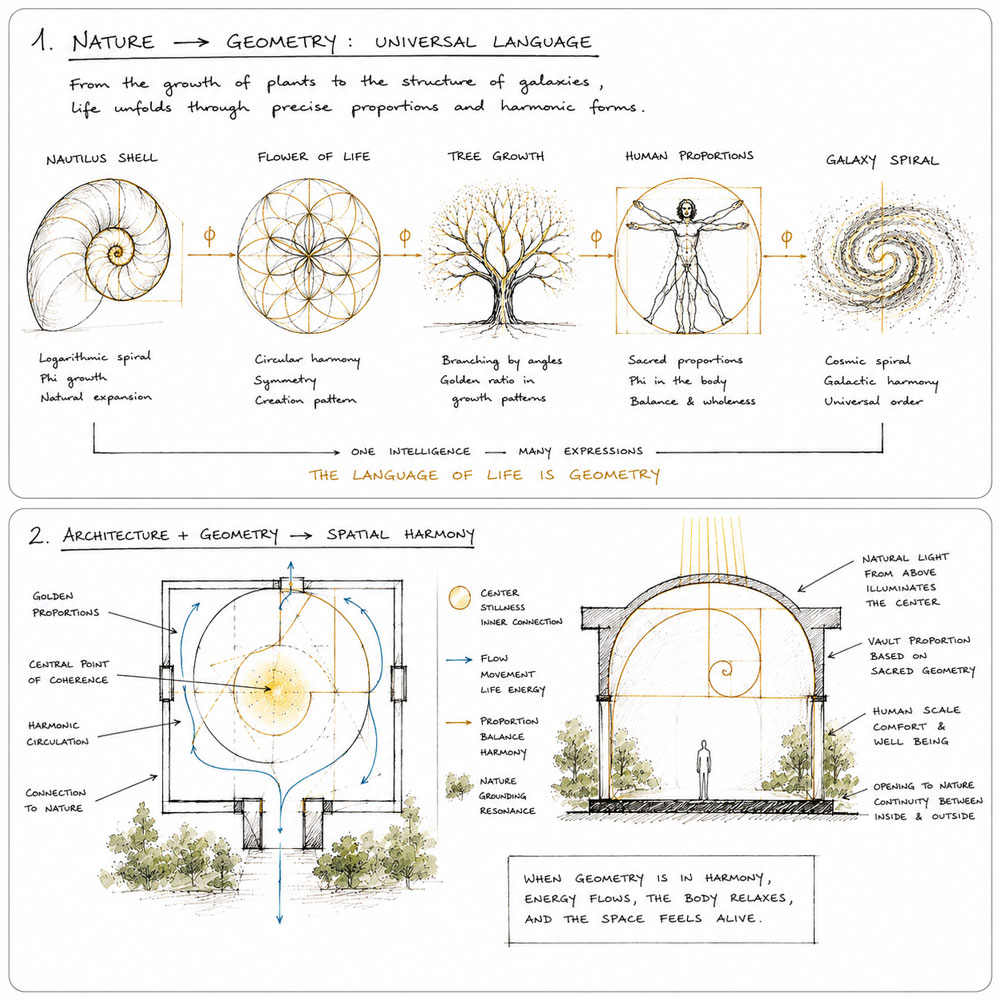
From the growth of plants to the structure of galaxies, life unfolds through precise proportions and harmonic forms.
By integrating sacred geometry, sacred units, and refined spatial forms, spaces become naturally balanced and more deeply connected to the greater harmony of the Universe.
Energy flows more freely, the body relaxes, and a deeper sense of coherence and connection begins to emerge.
Here, architecture becomes more than structure.
It becomes a bridge between human consciousness, nature, and the cosmos.
WOULD YOU LIKE TO DISCOVER HOW SACRED GEOMETRY CAN INFLUENCE A SPACE?
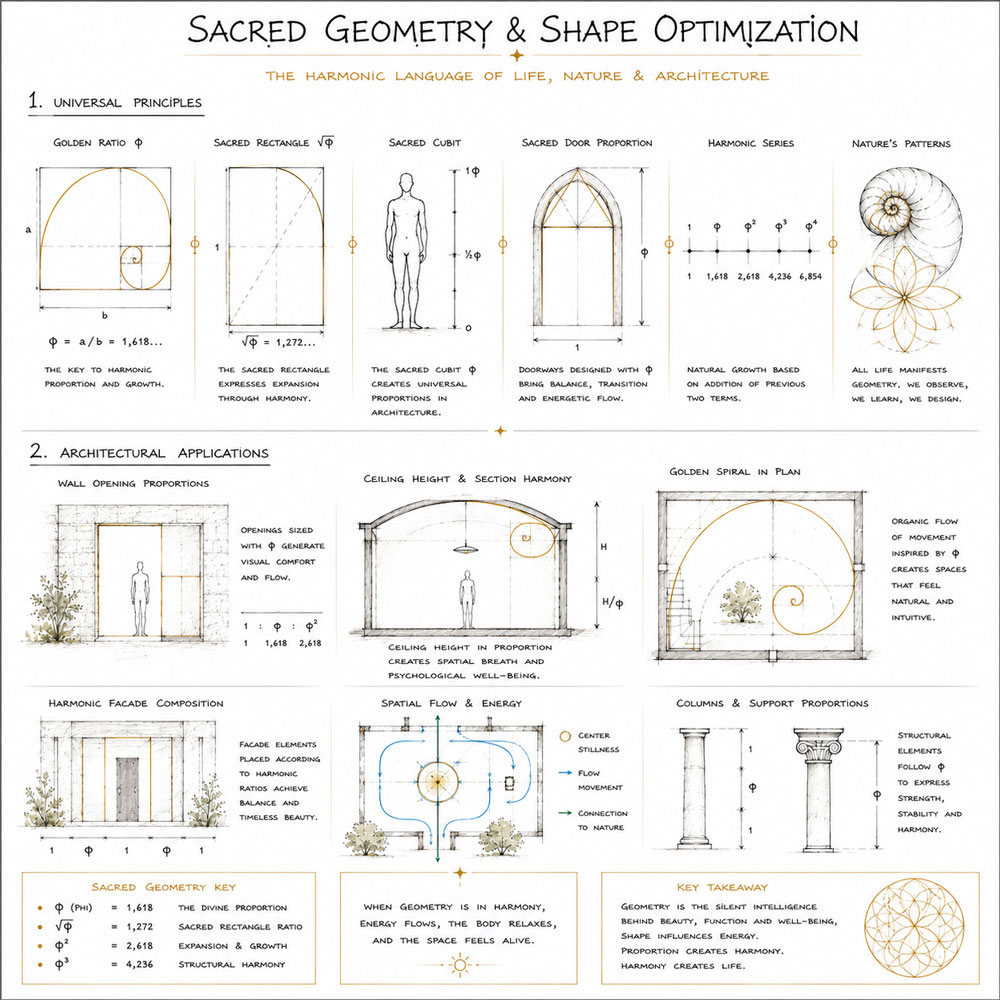
Sacred Geometry is the study of universal laws expressed through numbers, proportions, geometry, and harmonic relationships.
It is found throughout nature:
in the spiral of the nautilus shell,
the structure of flowers,
the growth of trees,
the proportions of the human body,
and even the organization of galaxies.
For thousands of years, sacred sites around the world have been designed according to these harmonic principles in order to create deeper resonance between human beings, the Earth, and the cosmos.
Designing with sacred proportions can create a profound sense of harmony, openness, grounding, and connection within a space.
This relationship is not merely symbolic.
It can often be felt physically, emotionally, energetically, and spiritually.
In conscious architecture, sacred geometry may influence:
- spatial proportions
- circulation and flow
- relationships between interior and exterior spaces
- ceiling heights
- natural openings
- energetic coherence
- the overall harmony of the environment
Particular attention may also be given to the effects of shapes and forms upon human well being.
Many traditional systems of spatial knowledge, including Feng Shui, recognize that certain forms, sharp angles, and spatial tensions may influence comfort, energetic balance, and perception over time.
Conversely, softer transitions, harmonious geometries, organic forms, and balanced proportions tend to create environments that feel calmer, more supportive, grounding, and alive.
Through these principles, architecture becomes more than construction.
It becomes an ecosystem designed to support harmony, beauty, regeneration, consciousness, and a deeper connection with life itself.